
An aesthetic practice in Frisco can have a beautiful website, hundreds of five-star reviews, and a full social feed — and still lose a first-time patient to a practice three miles away that the patient had never heard of an hour earlier. This is the central discoverability challenge facing medical aesthetics and cosmetic procedure practices across Allen, Plano, Frisco, and McKinney in 2025 and 2026.
That gap between being known and being found is the quiet story of medical aesthetics in North Dallas right now. And it is widening as AI-generated answers, Google Map Pack competition, and procedure-specific search behavior reshape how prospective patients discover, compare, and choose providers.
The market is growing fast. The medical aesthetics market reached 21.21 billion dollars in 2024 and is projected to hit 78.23 billion by 2033, growing at 15.77 percent a year. That is one of the highest sustained growth rates in consumer healthcare.
Texas sits near the center of it. As of 2026, tracking data lists 4,831 active aesthetic practices in Texas, second only to California. The Allen, Plano, Frisco, and McKinney corridor holds a dense, affluent, and increasingly sophisticated cluster of that total.
More providers means more competition for the same searches. And the way those searches work has changed underneath everyone.
Why Brand Recognition Does Not Equal Local Search Discoverability
Most established practices have solved for reputation. Existing patients know them. Referrals arrive. The brand looks credible.
Discoverability is a different problem. It answers a different question. When someone types lip filler near Plano or laser resurfacing McKinney into a phone, and has no loyalty to any practice yet, who shows up.
That person is not searching by business name. They are searching by treatment, by need, by location, and by the outcome they want. Your brand recognition does nothing for them because they do not yet know your brand exists.
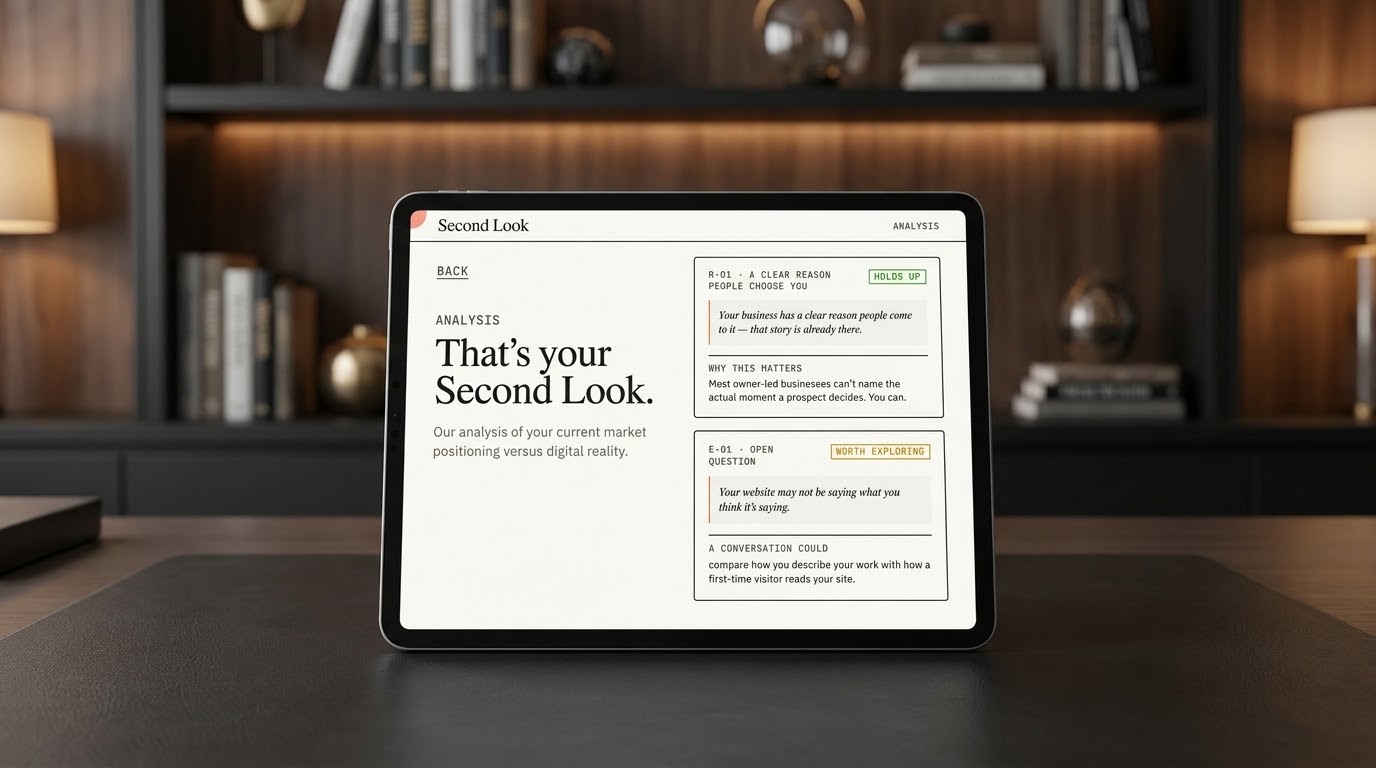
Legibility precedes visibility in local search. A search engine can only recommend what it can clearly read and verify. A practice that has never made its clinical expertise structurally clear — through dedicated treatment pages, named clinician authorship, and location-specific content — stays invisible to the exact person most ready to book.
The Four-Stage Patient Discovery Journey in North Dallas
Prospective patients move through a predictable path. Understanding it shows where practices quietly disappear.
Stage One: Treatment-Specific Search Queries and Why Thin Service Pages Fail
The journey starts with a specific want. Botulinum toxin remains the most requested non-surgical procedure, with 7.8 million treatments recorded in 2024 by the International Society of Aesthetic Plastic Surgery. Fillers, microneedling, and energy-based treatments follow close behind.
People search for the treatment, not the category. A practice with one thin page listing every service at once has nothing precise to offer these queries.
Individual treatment pages matter here. A dedicated page for each procedure, written with real depth about what it does, who it suits, and what recovery looks like, gives search engines something specific to match against a specific search.
Stage Two: Google Map Pack Competition and the Provider Comparison Window
Once someone knows what they want, they compare who offers it nearby. This is where the Google Map Pack decides outcomes.
Between 42 and 44 percent of local searchers click on Map Pack results, compared to 29 percent for organic listings. The top position averages a 17.6 percent click-through rate. The drop from third place to fourth is close to a cliff.
Practices inside the top three receive 93 percent more calls, direction requests, and website clicks than practices ranked four through ten.
This is where procedure-plus-location content earns its place. Pages built for Frisco, Allen, McKinney, and Plano individually capture suburban demand that a single broad Dallas page overlooks.
Stage Three: Credibility Verification and the Role of E-E-A-T Signals
After a shortlist forms, prospective patients verify whether they can trust a practice with a procedure that affects their health and appearance. This stage rewards structured evidence of clinical expertise over aesthetic website design. Under Google's E-E-A-T framework — Experience, Expertise, Authoritativeness, and Trustworthiness — medical aesthetics content carries the same scrutiny standard as other health-related information.
A complete Google Business Profile carries real weight. Customers are 2.7 times more likely to see a business as reputable when its profile is complete, and 70 percent more likely to visit.
Reviews shape this stage too. The repeat patient rate in aesthetic practices rose from 65 to 73 percent between 2022 and 2024, which tells you these treatments are becoming routine wellness behavior. Routine patients read reviews carefully before committing to a provider they will return to.
Stage Four: Clinical Authority as the Final Selection Factor
The final selection comes down to which practice reads as the safest clinical authority. Medical aesthetics falls under Google's Your Money or Your Life classification, which applies the strictest E-E-A-T scrutiny to any content related to health decisions. For aesthetic practices, this means anonymous content or uncredentialed authorship actively works against search visibility and AI citation eligibility.
After Google's December 2025 Core Update, about 67 percent of health-related websites saw ranking changes. Sites lacking credible authorship dropped. Sites showing clinical expertise gained.
Authority the machine can read is authority that counts. Treatment content authored under a named, credentialed clinician outperforms authorless copy. This is where a website stops being a brochure and starts being usable evidence.
Appearing in Google Search Is Not the Same as Being Recommended by AI
A newer layer now sits on top of traditional search results, and it is reshaping how North Dallas patients find and choose aesthetic practices.
Google AI Overviews appear on 48 percent of searches in the United States, answering the question before the user reaches the traditional list of blue links. Zero-click searches climbed from 56 to 69 percent between May 2024 and May 2025.
Patients increasingly ask AI assistants which local provider to trust, then act on the two or three names the system returns. Being indexed by a search engine no longer guarantees inclusion in that AI-generated answer. Practices that have not structured their content for AI citation are absent from this growing channel regardless of how long they have operated.
The correlation between traditional search ranking and AI citation is now nearly total. A February 2026 study found that 100 percent of sites that lost Google rankings also lost AI citations. The structural signals that make a practice readable to search — named authorship, procedure-specific pages, schema markup, and verified local profiles — are the same signals that make it citable to AI systems like ChatGPT, Perplexity, and Google AI Overviews.
What a Legible Aesthetic Practice Website Looks Like to Search Engines and AI Systems
Design signals care and professionalism. It does not, by itself, supply the structured evidence that search engines and AI systems require to rank, recommend, or cite a medical aesthetics practice.
A legible practice presence — one that a search engine can parse and an AI can cite with confidence — shows several specific characteristics:
- A separate, detailed page for each treatment rather than one crowded service list
- The medical director's name and credentials surfaced at the procedure level, not buried in an About page
- Structured information that lets a search engine parse treatments, locations, and clinician details cleanly
- Content attributed to a real, named clinician
- A complete Google Business Profile with accurate services, photos, and booking
- A steady, consent-based flow of reviews
None of that requires a shortcut. It requires making existing clinical expertise structurally clear. Practices that have not done this work are not invisible because they lack credibility. They are invisible because they have never translated that credibility into a form search engines and AI systems can read.
Why Regional Differentiation Across Allen, Plano, Frisco, and McKinney Is a Findability Asset
The North Dallas corridor is not one market. Allen, Plano, Frisco, and McKinney each have distinct search behavior and distinct demand patterns.
The 55-and-older female segment posted the largest share gain of any age group, rising from 21 to 24 percent of female patients in two years, and this group holds the highest disposable income of any aesthetic patient demographic. A practice that speaks clearly to specific communities and specific outcomes reads as more relevant than one aiming at everyone at once.
Specificity is the competitive advantage. Broad reach dilutes signal. Precise, hyper-local, treatment-level content compounds discoverability over time and resists the commoditizing pressure that broad, generic visibility accelerates.
The Defining Question for North Dallas Aesthetic Practices in 2026
The rules of local and AI search discovery have shifted from volume to legibility. Generic online presence no longer decides who gets found. Structured, clinician-attributed, location-specific content does.
Most visibility gaps in medical aesthetics are content structure gaps in disguise. The solution is not more content or louder marketing. It is making genuine clinical expertise readable to the systems — both search engines and AI platforms — that now answer first and recommend by name.
If a prospective patient did not already know the name of your practice, would your digital presence give search engines and AI systems enough evidence to find, trust, and recommend you?
If the honest answer is unclear, that is where the work begins.