Findability · Operations
The Followers Are Still There. I Just Can’t Reach Them.
November 18, 2026
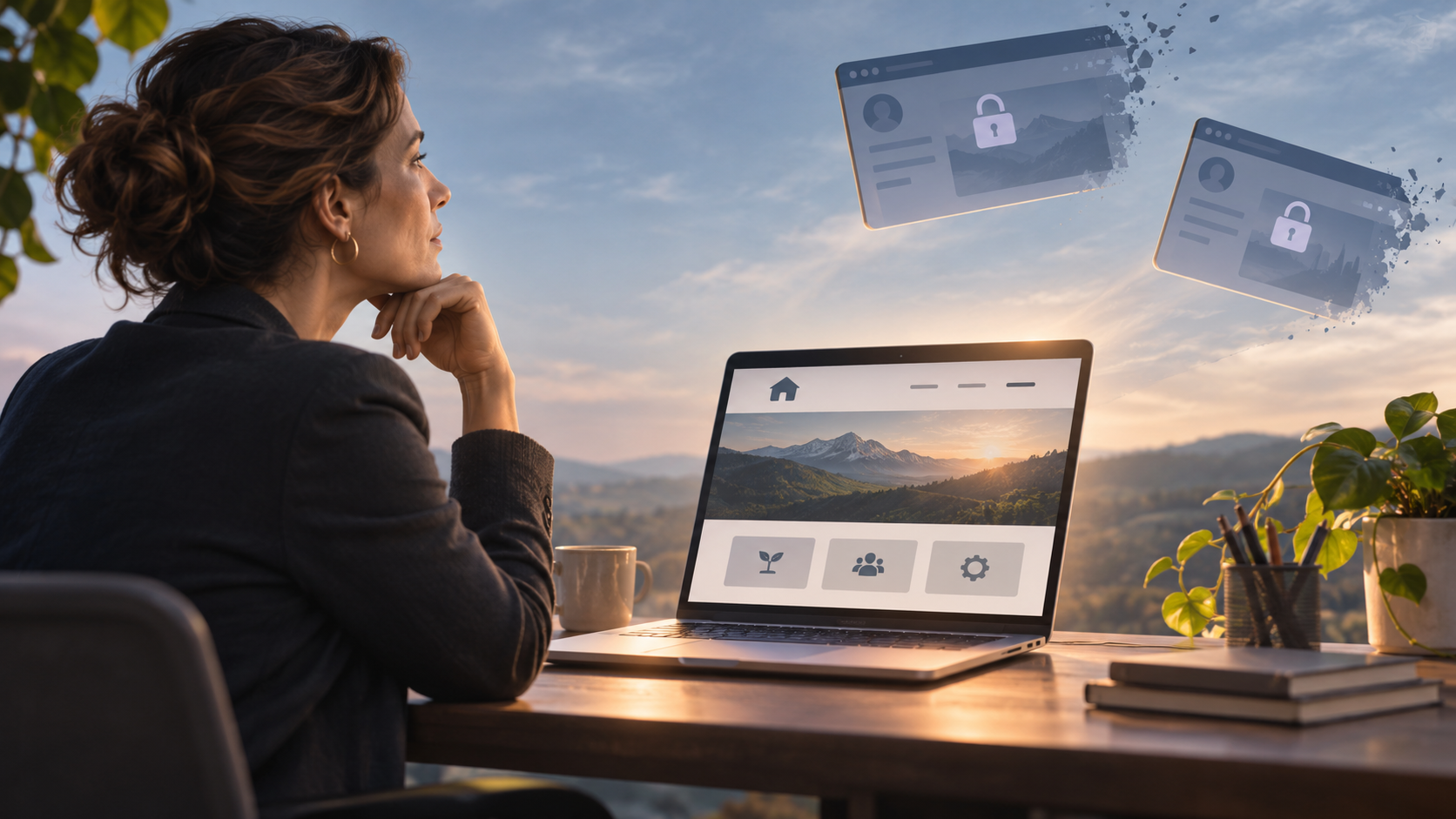
I lost control of two Facebook Pages I had built and maintained for years. The first was Jean Dorff Consultancy, my professional business presence, with its own history, followers and accumulated credibility. The second was The Empowering Story, a separate community I run alongside the consultancy. A former volunteer I had given administrative access to took control of both. I could show how the Pages connected to my businesses and their domains. Meta said it could not step in.
I work in digital strategy. I help experts become findable in AI-driven search, and I advise business owners on exactly this kind of dependency. So I put my own business through the same audit I would run for a client. The results were humbling, and I think they are worth sharing in full.
Here is the distinction that shaped the audit. Being findable means people have a way to reach you. Being resilient means that way survives when one platform fails. I had been treating these as the same achievement. They measure different things.
I started with the parts that passed. Jean Dorff Consultancy runs on its own domain. The Empowering Story has its own domain as well. I maintain email systems and contact databases that live outside Facebook's walls.
If Facebook disappeared tomorrow, I would still exist online. People could still find me. That part works.
Then I looked at the part that failed the test.
Some people have followed my work on Facebook for years without ever subscribing to a newsletter or visiting the website. That includes prospects, past contacts and professionals who know Jean Dorff Consultancy primarily through that Page. Their entire relationship with my work lives inside Facebook. If that platform closed their account or mine, years of built trust would become unreachable in a single day.
I have their attention. I lack a reliable way to contact them. Those are two very different assets, and only one of them belongs to me.
Follower counts, engagement rates, reach, impressions. These numbers feel like ownership. They behave like rented access.
The question I now ask instead: of all the people in those counts, how many could I actually communicate with tomorrow if the platform disappeared?
For a meaningful portion of my own audience, my honest answer is that I could not. That admission is uncomfortable for someone who advises others on digital presence. It is also the most useful finding of the entire exercise, because a vulnerability you can name is a vulnerability you can address.
Partly. The standard advice says to move your audience to email. I followed that advice, and it improved my position considerably. I want to be precise about what it accomplished.
Moving to email changed the dependency. It did not eliminate it. My list lives with an email provider. My deliverability depends on inbox algorithms I do not control. My websites depend on hosting companies. My customer records depend on database software. My workflows depend on automation tools, and increasingly on AI systems with their own terms of service.
Complete independence is unavailable to a modern business, and chasing it wastes energy better spent elsewhere. The realistic objective has three parts: understand your dependencies, decide which risks you will accept, and ensure you hold alternatives for the dependencies that matter most.
Some risks are worth accepting. A hosting provider that fails can be replaced in a day because I control the domain and keep backups. A social platform that locks me out of an audience I never captured elsewhere represents a permanent loss. The first risk I accept. The second one I am actively working to reduce.
I used to evaluate digital presence with a single question: can customers find you today? My audit convinced me that a second question matters more.
If one of your essential digital channels disappeared tomorrow, what would still work?
Walk through your own operation with that question. Your social accounts. Your email provider. Your website host. Your customer database. Your AI tools. For each one, trace what breaks when it goes dark and what remains standing.
💡 A practical starting point: identify the audience segments you can only reach through one platform, then give those people a specific reason to join a channel you control. One genuine offer, made consistently, moves relationships onto ground you own.
When I put my own business through this, five areas mattered most:
1. Asset control. Who owns the domain registration, the website, the Facebook Business Portfolio, the ad accounts and the customer database? Having a login that works today is one thing. Being able to remove other people's access and recover the account is a higher level of authority.
2. Dependencies. Map which tools rely on which. A single integration can become the point of failure for an entire workflow.
3. Relationship channels. You don't own your audience. What you can control, within privacy rules, is the infrastructure people have chosen to use to hear from you: your domain, a properly maintained contact database, a permission-based email list.
4. Delegation. Give people the access their role requires. Someone managing posts rarely needs the authority to change ownership or remove administrators. Decide in advance what happens to their access when the role ends.
5. A tested recovery plan. Know who can act if an account is compromised, where the backups live, and where you would publish an official notice. Then test the plan, because believing you can recover something tells you much less than having actually done it.
My audit ended with a mixed grade, and I think honesty about that serves you better than a polished success story would.
People can find me without Facebook. I cannot yet say with full confidence that I could reach everyone I would want to reach if a major platform vanished. Closing that distance is ongoing work, done deliberately, one dependency at a time.
Resilience in a digital business comes from knowing exactly what you depend on, choosing those dependencies with open eyes, and holding a working alternative for the ones you cannot afford to lose. Visibility brings people to your door. Resilience keeps the relationship alive when one of the doors closes.
Run the audit on your own business before circumstances run it for you. The findings will likely be uncomfortable. They will also be the clearest strategic information you gather this year.
Jean Dorff is the founder of Jean Dorff Consultancy, a strategist with more than thirty years in business strategy, and the author of seven books. He helps experts and professional-services firms make their authority findable in AI-driven search.
This article is last updated November 16, 2026
Frequently asked questions
Being findable means people can locate you and have a way to reach you. Being resilient means that way still works when one platform, account or provider fails. A business can be easy to find and still lose contact with a large part of its audience overnight.
In my case, Meta said it could not intervene, even though I had evidence linking the Pages to my businesses and domains. Other cases may turn out differently, but I would not build a business continuity plan on the assumption that the platform will step in.
Start by finding the audience segments you can reach only through one platform. Then give those people a genuine reason to join a channel you control, such as your website or an email list. Pair that with clear access rights and a recovery plan you have actually tested.
No. Every business depends on providers for hosting, email, software and increasingly AI tools. The realistic objective is to know your dependencies, decide which risks you accept, and hold alternatives for the ones you cannot afford to lose.
Related reading
Findability · Operations
November 18, 2026
Findability · Operations
November 18, 2026
Findability · Operations
November 16, 2026
About the author
Jean Dorff is a strategist, author, and educator with more than thirty years in business strategy, fourteen years at Malmberg (Sanoma Group) through its print-to-digital transition, and fourteen years at Texas Instruments Educational Technology as Director of Business and Product Strategy for Europe and Asia, followed by independent strategic consultancy and coaching. He writes on findability, authority building, and AI strategy from Allen, Texas. More about Jean.
Start here
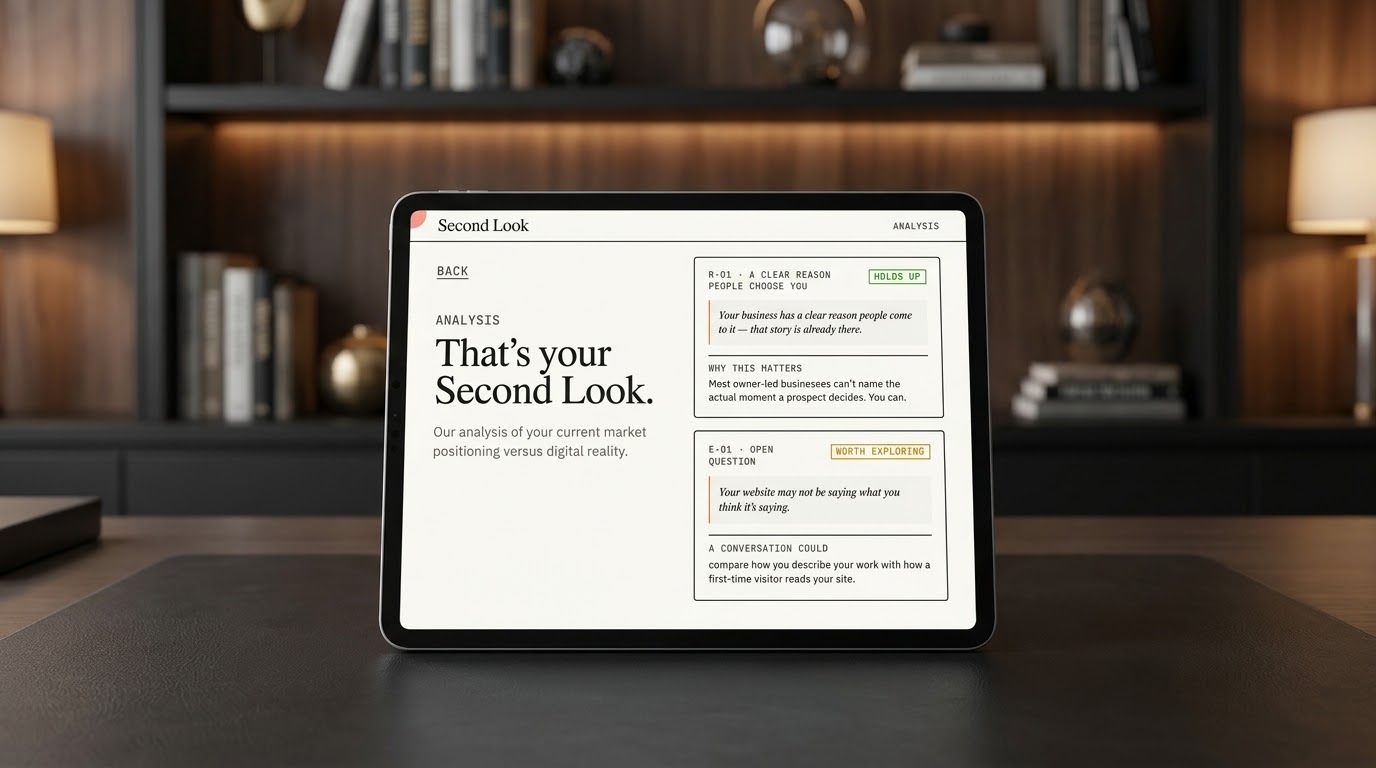
Twenty minutes. A free guided diagnostic that will show you what the world sees when it searches for your business and businesses like yours. What AI engines find, and what they don't. What holds up, and what's worth exploring. No data collected unless you choose to share it. Designed by Jean Dorff, powered by the same diagnostic thinking behind more than thirty years of strategic consulting.
Get the Second Look →