Findability · Operations
The Followers Are Still There. I Just Can’t Reach Them.
November 18, 2026
This is the third article in a four-part series on digital ownership, platform dependency, and business resilience. In Part 1, "Findable Is Not the Same as Resilient," I described losing control of two Facebook Pages. Part 2 examined the five areas of digital resilience every business leader should understand. This article returns to the personal experience behind those lessons—and what remained mine when control of a digital space was taken away.
The Empowering Story was never just a business page to me.
It grew out of my own history of childhood sexual abuse, the years I spent in silence, and the moment I finally found the courage to tell my story. That story became my book, Broken Silence. The Facebook Page became another place where I shared something deeply personal, and where survivors came to do the same.
A former volunteer, someone I had given administrative access, took control of it. I provided evidence connecting the Page to my work and business, but Meta indicated it could not intervene.
I had very little power to stop any of it.
So much of my work with survivors concerns reclaiming their voice. Making their own choices. No longer allowing other people to determine their narrative.
Then someone else took control of a space where I had been doing precisely that work.
I want to be careful here, because the comparison can easily be stretched too far. Losing access to a Facebook Page does not compare to experiencing abuse. I will not pretend the two sit on the same scale, and I would never say that to a survivor.
Still, control and ownership mean something very different when you have experienced what it means to have them taken away. The scale was different. The underlying question was recognizable.
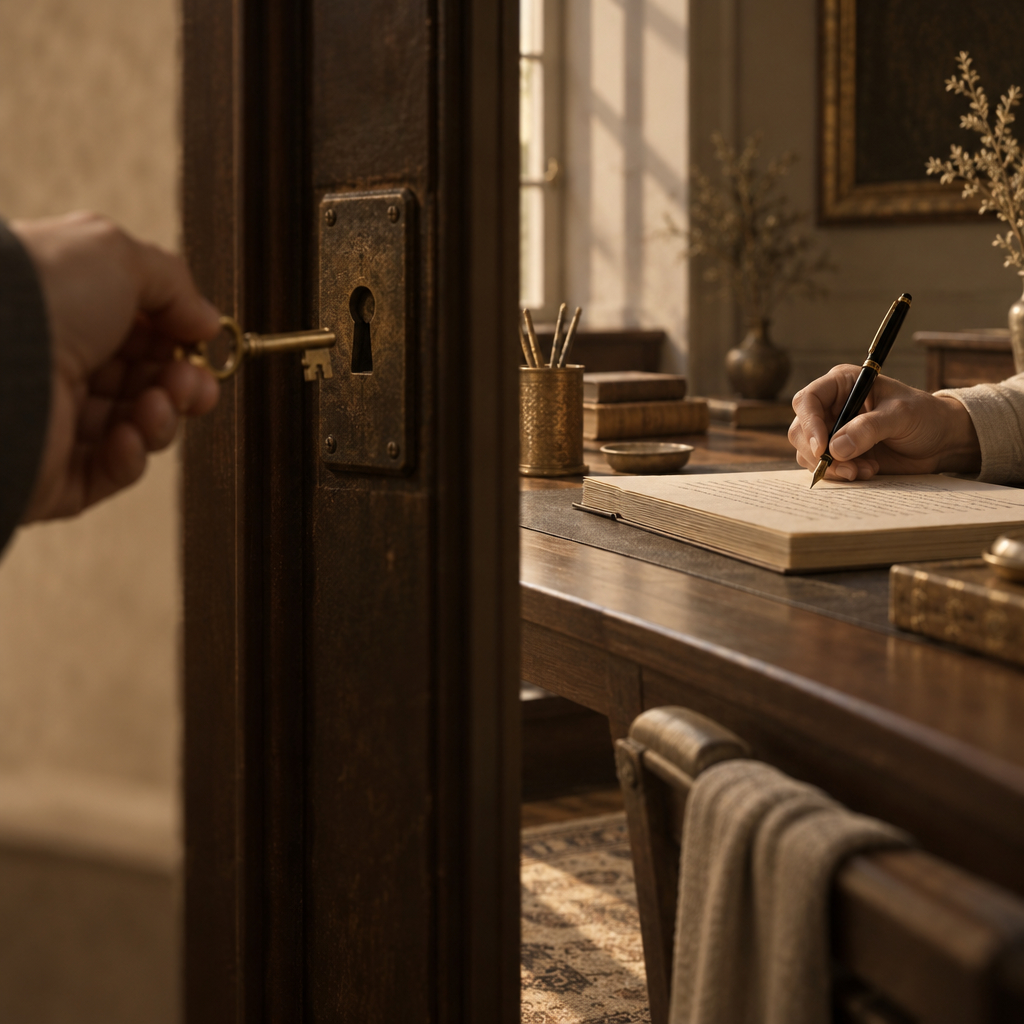
Who gets to decide? Who controls access? Who holds the keys to a space you built around trust?
Those questions sat with me for days. They are the same questions I have spent years helping other people answer about their own lives. Now I had to answer them again, in a smaller arena, about a Facebook Page.
The practical loss was real. Years of posts, a community, conversations with people who had trusted that space enough to speak in it.
The deeper injury was structural.
Someone else could interfere with a space I had built around trust, and the platform that housed it indicated that it could not resolve the situation. I had built something honest. I could demonstrate its connection to my work. None of that protected my access.
This is the part I think deserves attention beyond my own situation.
When you build a community on a platform you do not control, access is not the same as ownership.
A Facebook Page may represent your business, carry your name, and contain years of your work. But the ability to manage that Page depends on permissions and platform governance you do not ultimately control.
Access can be removed or reassigned. It can disappear through another person's actions and the limitations of a platform's recovery procedures.
I knew this intellectually.
I understood it differently after it happened to me.
I trusted someone with administrative access. That trust became the opening through which the loss arrived.
Here is where I had to be honest with myself, because the easy conclusion is also the wrong one.
The easy conclusion says: trust fewer people. Guard everything. Keep the keys in one pocket and never hand them out.
I reject that conclusion.
Communities like The Empowering Story only exist because people extend trust to one another. Survivors speak because someone creates a space where they feel they can be heard. Volunteers show up because someone believes they can carry responsibility.
If the lesson I took from this was to stop trusting, I would be dismantling the very thing I was trying to protect.
You can trust someone and still establish boundaries.
Those two things belong together.
A boundary says: here is what access looks like, here is what happens when a role ends, and here is what remains under my control regardless of who is helping.
Trust without that structure can leave everything exposed to a single decision by a single person.
Trust with that structure remains trust, but the consequences of its failure can be limited.
I did not have sufficient boundaries in place. That is my responsibility to address, and I say that without shame, because the alternative is pretending the failure belonged entirely to someone else.
For years I have told survivors a version of the same idea: you cannot change what was done to you, and you can decide what you do next.
Now the principle came back to me, asking whether I actually believed it.
I cannot change what this person did. I cannot force Meta to respond the way I believe it should. Those are realities I have to work with, whether I agree with them or not.
Continuing to argue with what I cannot presently change would keep my attention fixed on something over which I have little control.
I know that from experience far heavier than this one.
What remains mine is the next move.
That is what the two experiences genuinely share. The common thread is the question of what I do after someone else makes a choice about my life or my work without my consent.
The circumstances are profoundly different, but the question of agency remains.
The person who caused the harm does not get to determine every decision I make afterward.
That realization settled something in me.
The Page is gone from my hands.
The work continues from mine.
I used to think reclaiming authorship meant regaining control, getting the thing back, restoring the situation to what it was before.
I think differently now.
Reclaiming authorship means recognizing where your choices still exist, even when someone else has taken choices away.
Nobody gets control over everything that happens to them.
Survivors know this in ways that extend far beyond anything I am describing here. Builders of online communities can encounter a much smaller version of that loss of control when a platform policy or another person's actions remove something they spent years constructing.
The circumstances differ enormously.
The remaining question is recognizable: given what I cannot undo, what can I still author?
For me, the honest inventory looked like this.
My story remains mine.
The Page hosted it. The Page never owned it.
Every word of Broken Silence, every conversation I have had with a survivor, every piece of understanding built over those years, travels with me to whatever space comes next.
The relationships do not all disappear with the Page.
Some people remain connected to me, to the work, and to each other through other channels. Others may be harder to reach, and I do not want to pretend otherwise.
A Page was one doorway. I can build another doorway, even if rebuilding those connections takes time.
The principle remains testable.
I spent years telling people that agency can survive loss.
Now I have an opportunity to demonstrate it instead of just describing it.
That is uncomfortable, and it is also a kind of integrity check I did not ask for.
If you take one idea from this, I would offer the distinction between losing a tool and losing a voice.
A platform is a tool.
It amplifies, it hosts, it connects.
Someone can take control of that tool through access they were given, through a policy you cannot successfully appeal, or through circumstances you never anticipated.
Your voice lives somewhere a platform cannot reach.
It lives in what you know, what you have survived, what you are willing to say out loud, and who trusts you because you said it.
When those two things get confused, every platform loss can feel like a silencing.
When they stay separate, we can begin to recognize that losing a platform does not necessarily mean losing our ability to speak, connect, or continue our work.
The practical problem remains. So does the emotional impact.
And rebuilding may be difficult.
I felt the silencing version first.
It took me time to begin seeing the choices that remained available.
I share that honestly because pretending the change in perspective was instant would make it useless to anyone going through something similar.
I am rebuilding, with boundaries this time.
Clearer access structures. Defined roles with defined endings. A home base under my own control, with external platforms treated as outposts instead of foundations.
These are practical steps, and they also express something larger: trust, extended deliberately, with structure underneath it.
I hold no illusion that structure prevents all betrayal.
It limits what betrayal can take.
And I carry forward the thing this experience confirmed rather than taught.
Authorship was never about controlling outcomes.
It is the ongoing act of choosing your response when outcomes refuse to be controlled.
I learned that first in the hardest way a person can learn it.
Losing control of a Facebook Page gave me a smaller, stranger occasion to practice it again.
Someone else decided what happened to that space.
I decide what happens next. That part was never theirs to take.
This is Part 3 of a four-part series on digital ownership, platform dependency, and business resilience. The final article brings the business and personal perspectives together, examining what this experience changes about building a digital presence that can survive the loss of any single platform.
About the author: Jean Dorff is the founder of Jean Dorff Consultancy, where he advises business leaders on AI strategy, digital presence, authority, and organizational decision-making. He is also the founder of The Empowering Story, where his work focuses on narrative transformation and trauma recovery. He is the author of nine books, including Broken Silence: Living with Passion and Purpose after Sexual Abuse, A Dancer's Story.
This article is last updated November 18, 2026
Frequently asked questions
Creating a Page, maintaining its content, and establishing its connection to a business do not necessarily guarantee that you retain administrative control. Access depends on Meta's permission and business-management arrangements. Business owners should verify who can manage permissions, remove other users, and initiate recovery.
Give collaborators only the access their responsibilities require. Review permissions regularly, establish procedures for removing access when roles end, and ensure that appropriate business representatives retain administrative authority. Maintain independent communication channels and document recovery procedures.
Yes, although rebuilding can be difficult, and some connections may be lost. A website under the business's domain, a permission-based mailing list, and other established communication channels provide ways to reconnect with an audience. The important distinction is that losing a platform does not automatically mean losing the work, expertise, or relationships developed through it.
Related reading
Findability · Operations
November 18, 2026
Operations · Findability
November 16, 2026
Findability · Operations
November 16, 2026
About the author
Jean Dorff is a strategist, author, and educator with more than thirty years in business strategy, fourteen years at Malmberg (Sanoma Group) through its print-to-digital transition, and fourteen years at Texas Instruments Educational Technology as Director of Business and Product Strategy for Europe and Asia, followed by independent strategic consultancy and coaching. He writes on findability, authority building, and AI strategy from Allen, Texas. More about Jean.
Start here
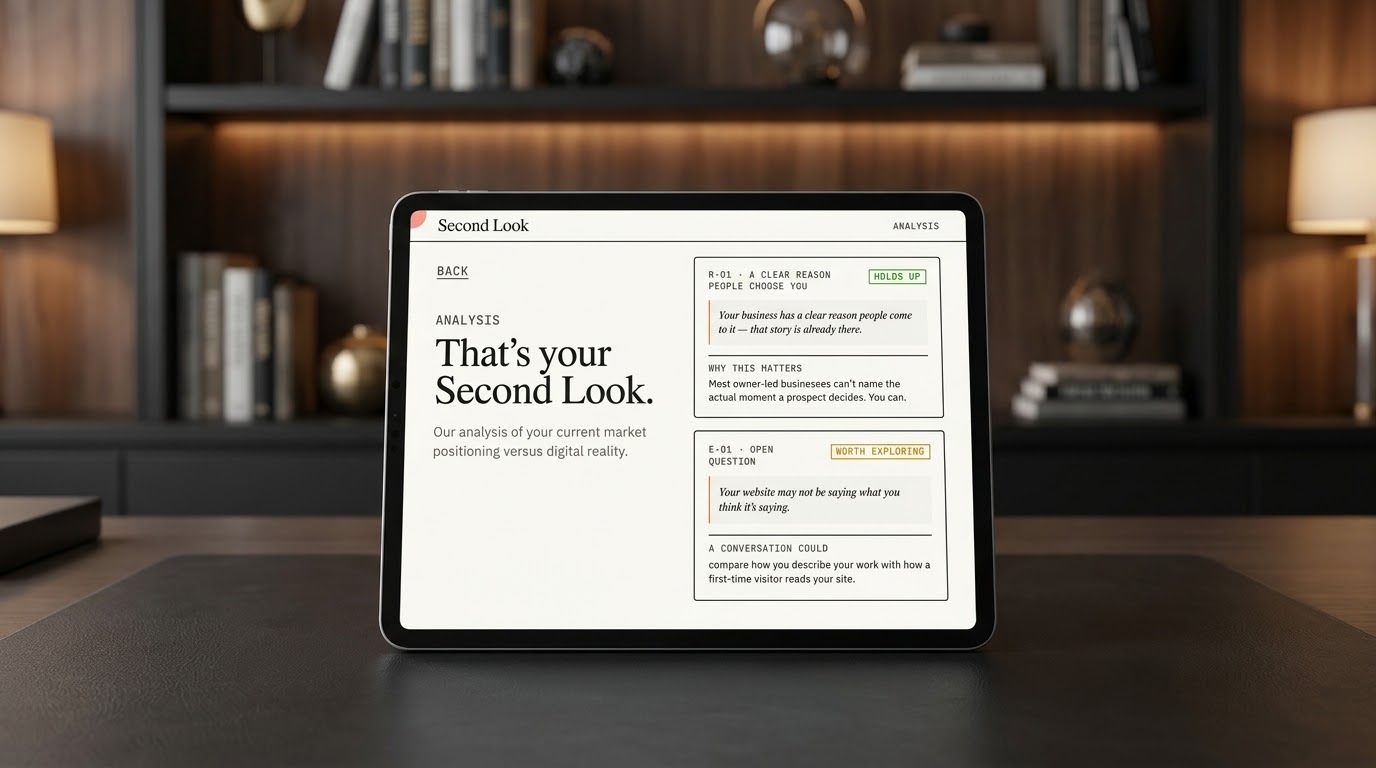
Twenty minutes. A free guided diagnostic that will show you what the world sees when it searches for your business and businesses like yours. What AI engines find, and what they don't. What holds up, and what's worth exploring. No data collected unless you choose to share it. Designed by Jean Dorff, powered by the same diagnostic thinking behind more than thirty years of strategic consulting.
Get the Second Look →