Findability · Operations
Someone Took Control of My Page. Here Is What I Decided to Keep.
November 18, 2026
This is the fourth and final article in a four-part series about losing access to two Facebook Pages I built over many years, and what that experience taught me about digital ownership, platform dependency, and business resilience. In Part 1, "Findable Is Not the Same as Resilient," I examined the difference between being findable and being resilient. Part 2 introduced the Five-Part Digital Resilience Check. Part 3 explored trust, boundaries, and what remained mine after losing control. This final article turns to the people on the other side of the screen.
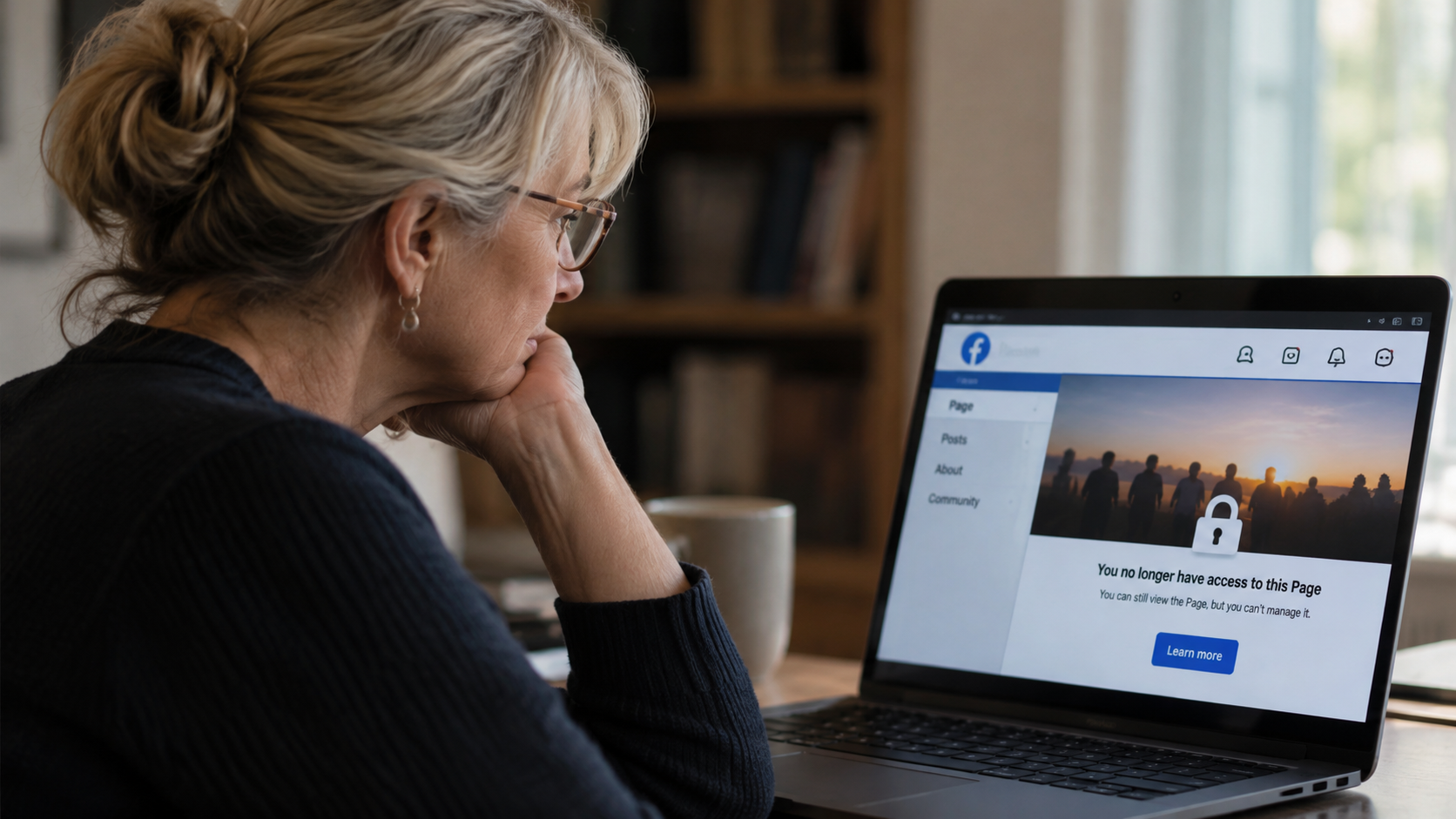
I lost control of the Facebook Page for The Empowering Story. The followers are still there. I simply cannot speak to them anymore.
The Page did not disappear through a forgotten password. A former volunteer, someone I had given administrative access to help with the work, took control of it, along with the Page for Jean Dorff Consultancy. When I approached Meta with evidence connecting both Pages to my businesses and their domains, Meta indicated it could not intervene.
I advise businesses on exactly these platform dependencies, and that knowledge did not protect me from this one.
The Empowering Story grew out of my own history of childhood sexual abuse, the years I spent in silence, and eventually my book, Broken Silence. Today it carries my work with survivors. That is why this loss weighs differently than losing a business Page.
In digital strategy, we reduce people to numbers because that is how the platforms present them to us. A dashboard shows reach, growth, engagement. It never shows the person behind the count.
Behind those numbers are individuals. Some of them may have found my work at a vulnerable moment in their lives. Some may have followed the Page quietly because they were unable to speak about what had happened to them.
I want to be careful here. I cannot assume that everyone who followed was a survivor or needed support. I only know that some might have been, and that possibility shapes what I owe them now.
I believe a creator who loses access to a Facebook Page owes the followers three things: honesty about who controls the Page now, a reasonable effort to stay findable through channels the creator controls, and respect for each person's right to decide whether to reconnect at all.
The simplest obligation is also the clearest one. I should tell the truth about what happened. I will not pretend the Page is still under my control.
I will not let people assume that anything published there represents me or The Empowering Story. Silence would allow a false impression to stand, and a false impression attached to my name becomes my responsibility to correct through the channels available to me.
Honesty here is a protective act. If someone trusted that Page as a source, they deserve to know the source changed hands.
I cannot reach them. I can make sure they can reach me.
That means three practical things:
This is ordinary work, and it matters more than any recovery tactic. If someone from that audience goes looking for me next month or next year, the trail should be short and unambiguous. Making that trail exist is within my power.
Whether anyone follows it is within theirs.
This includes their right to end it. Losing a channel creates a temptation that deserves naming. The temptation to pursue people across other platforms, to collect information about them, to rebuild the audience at any cost.
I refuse that path.
With people who may have experienced abuse, boundaries carry extra weight. Someone who once chose to follow quietly made a decision about distance. Tracking them down would override that decision.
Whether they reconnect is theirs to decide, and only theirs.
A door left open and a hand pulling you through it are two different experiences. My job is the door.
No, and the language of digital strategy encourages a quiet error here. We say "my audience" and "my followers," and over time the possessive starts to feel literal.
Their attention was something they chose to give. Their trust was something I had to earn. Both remain theirs.
Treating either as an asset I am entitled to reclaim would misread the entire relationship.
This distinction is important well beyond social media. Businesses spend enormous amounts of time and money on audience acquisition, customer data, conversion, and retention. These activities have legitimate purposes, but they can also encourage us to think of relationships as things we possess rather than connections people choose to maintain.
A contact database is an asset a business can manage. The people represented in it are not.
So I would frame the obligation this way. The responsibility is to remain accessible, to communicate truthfully, to protect their dignity, and to leave the door open. Some of those connections are gone, and I have to accept that the loss is mine to carry.
I cannot turn my loss into an obligation for them.
If you build an audience on a platform you do not control, consider the same questions before anything goes wrong.
These are not merely questions about recovering a social media account. They concern how you build your digital presence, how you protect the relationships that develop around it, and what remains possible when a platform or a person you depend on is no longer available.
That is the lesson I am taking from this experience. Being findable matters. Being resilient matters. But neither gives us ownership of the people who choose to engage with us.
The relationship was always theirs to choose. That was true on the day they followed, and it stays true on the day you lose the ability to speak to them. Everything I owe the people I can no longer reach flows from that one fact.
I will keep the door open. They decide whether to walk through it.
This article concludes the four-part series, but the questions it raises are worth examining beyond my own experience.
I've developed two complementary resources for anyone who wants to understand digital resilience more clearly and consider what it means for their own business.
What Losing Control of Two Facebook Pages Taught Me About Digital Ownership, Trust, and Business Continuity
The four articles have been rewritten into one short business book. Rather than repeating the individual posts, it connects the personal experience to a broader examination of digital ownership, dependencies, leadership responsibility, trust, and the people behind our audience metrics.
What it helps you understand: Why a business can have a strong digital presence and still be vulnerable; how apparently sensible technology decisions can create dependencies; and why protecting relationships requires more than controlling accounts. The book also presents the Five-Part Digital Resilience Check as a practical framework for examining your business.
The e-book landing page is available; the PDF is not yet available to read or download.
Understanding the risks is one thing. Knowing where your own business stands is another.
I've made the Five-Part Digital Resilience Check available as a simple, interactive self-assessment covering:
The check provides a resilience profile and identifies areas that may deserve attention. It doesn't replace a full technical or operational audit. Its purpose is to help you see your current position more clearly before deciding whether anything needs to change.
It is free. No registration or email address is required. Your assessment stays in your browser. If you have a concern you'd like to share afterward, you can choose to contact me.
Otherwise, the results are yours to use.
These resources are not intended to convince you that something is wrong with your business or that you need another service. They are an invitation to examine what you have, understand what you depend on, and decide what deserves attention.
Clarity before solutions.
About the author: Jean Dorff is the founder of Jean Dorff Consultancy, where he advises business leaders on AI strategy, digital presence, authority, and organizational decision-making. He is the author of nine books, including Broken Silence: Living with Passion and Purpose after Sexual Abuse, A Dancer's Story, and the founder of The Empowering Story, where his work focuses on narrative transformation and trauma recovery.
This article is last updated November 18, 2026
Related reading
Findability · Operations
November 18, 2026
Operations · Findability
November 16, 2026
Findability · Operations
November 16, 2026
About the author
Jean Dorff is a strategist, author, and educator with more than thirty years in business strategy, fourteen years at Malmberg (Sanoma Group) through its print-to-digital transition, and fourteen years at Texas Instruments Educational Technology as Director of Business and Product Strategy for Europe and Asia, followed by independent strategic consultancy and coaching. He writes on findability, authority building, and AI strategy from Allen, Texas. More about Jean.
Start here
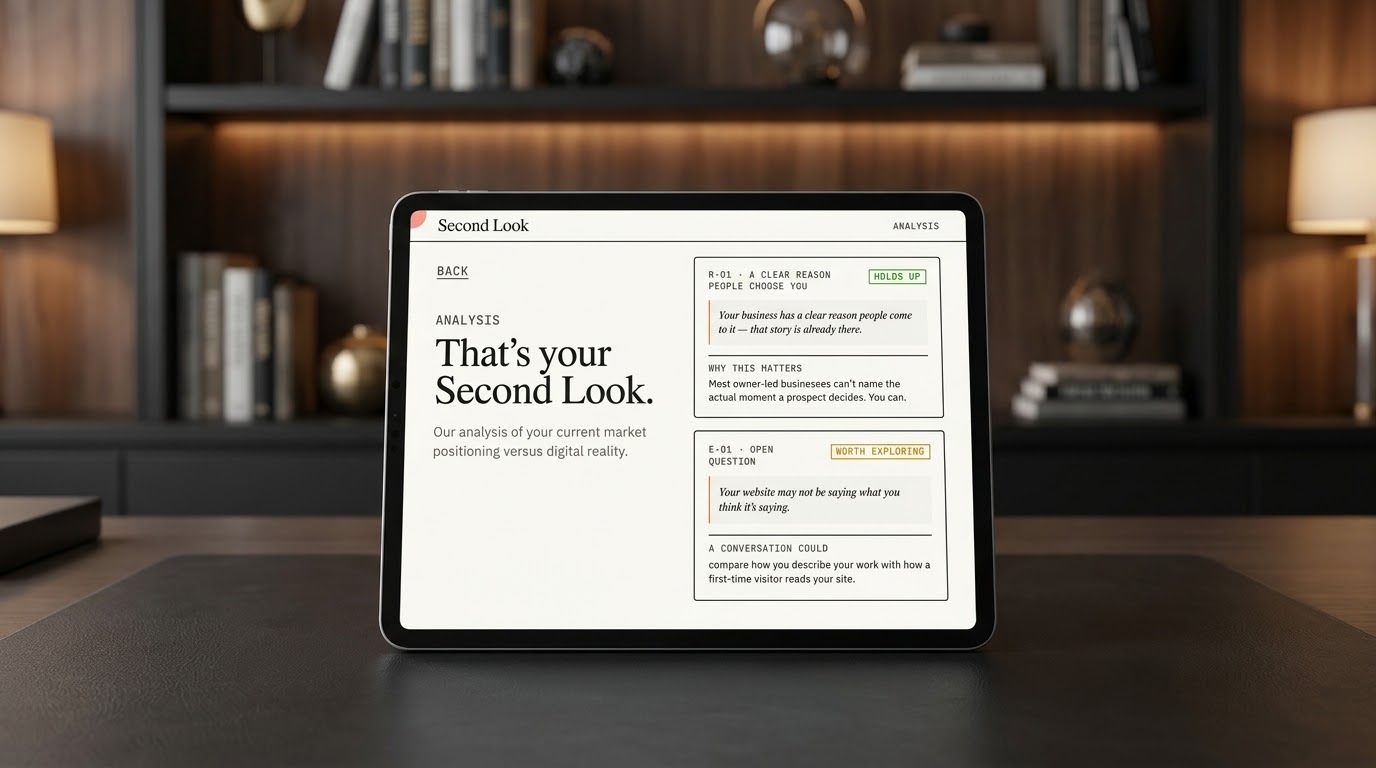
Twenty minutes. A free guided diagnostic that will show you what the world sees when it searches for your business and businesses like yours. What AI engines find, and what they don't. What holds up, and what's worth exploring. No data collected unless you choose to share it. Designed by Jean Dorff, powered by the same diagnostic thinking behind more than thirty years of strategic consulting.
Get the Second Look →